Investment Thesis
Xiaomi Corporation (1810.HK) is a Chinese technology company with core segments in consumer electronics and electric vehicles. Within China, the company has the largest consumer ecosystem, with over 1 billion IoT (Internet of Things) smart devices. While consumer electronics represents the majority of group revenue, the electric vehicle segment launched in 2024 now contributes one quarter of total revenue, driven by strong growth, and remains in the early stage relative to the mature hardware business.
Xiaomi's entrance into the electric vehicle market marks a transition of its business model from primarily a consumer electronics manufacturer to a high-technology manufacturing platform. Initial data showing strong demand and improved segment margins indicate that the EV segment can be a new growth engine for the company.
The key structural driver for Xiaomi's success in this new segment is the supplier ecosystem established in China as a result of Tesla's entry in 2019. Tesla's Shanghai factory resulted in the buildout of domestic tier-1 and tier-2 suppliers, improved manufacturing standards and technology, and accelerated the transition of consumers from hardware-first to software-defined vehicles. These advances changed the environment, which allowed new entrants like Xiaomi to scale rapidly. Against this backdrop, Xiaomi enters the market with structural advantages with a developed software-native consumer ecosystem, experience in hardware-integrated design, and a mature, fully localized manufacturing base.
Business Overview
ASP Uplift as the Economic Engine
Historically, Xiaomi's revenue was dominated by the Smartphone × AIoT segment. The launch of the SU7 sedan electric vehicle introduced a new revenue stream with prices in the premium EV segment, RMB 200,000–300,000, a material shift from RMB 1,100 consumer electronic products.
The smartphone and home appliance segment remains the largest revenue contributor; however, growth has slowed. Segment ASPs are consistently around RMB 1,100, while the new segment "Smart EV, AI, and Other New Initiatives" ASPs are above RMB 240,000, creating a significant difference in revenue profile.
China's EV market is notoriously competitive; however, Xiaomi maintains 32–38 week wait times on new models. The YU7 SUVs accounted for 69.2% of Xiaomi EV deliveries. In October 2025, Xiaomi's YU7 SUV became the best-selling SUV in China (33,662 units).
Since launching the first sedan in 2024, Xiaomi's sector gross margins have risen to 25.5%, vs. 15.4% in H1 2024. In Q3 2025, the EV segment reported RMB 0.7 billion in operating profit. This marked the first profitable quarter in the automotive segment, a considerable improvement over new EV entrants in the market.
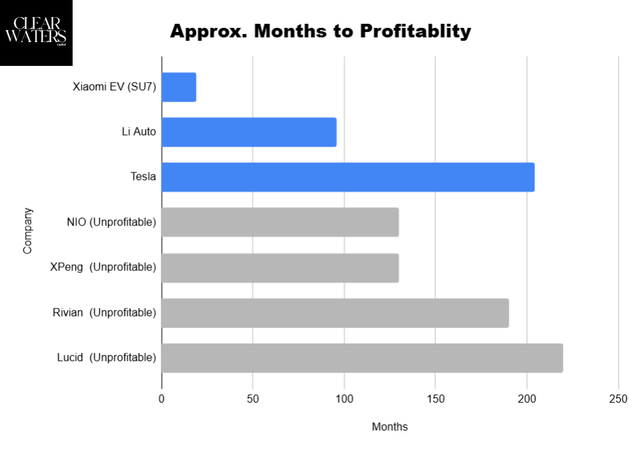
The Tesla Ecosystem Effect
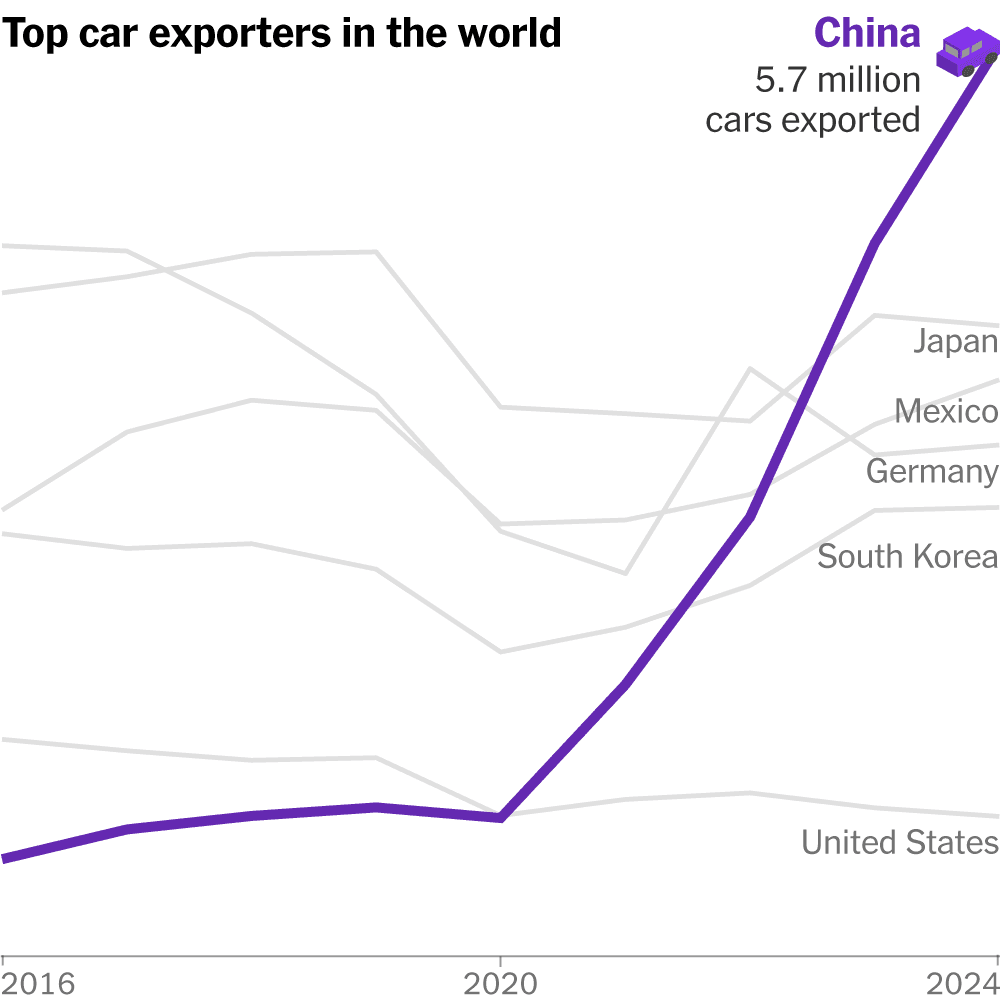
Xiaomi's road to profitability is explained by two structural forces: (i) the maturity of the EV supply chain following foreign investment since 2019, and (ii) China's industrial policy prioritizing smart mobility.
In 2019, China permitted Tesla to establish a wholly owned vehicle manufacturing facility in Shanghai. Between 2019 and 2023, localization of Tesla's supply chain grew from roughly 30% to 95%, and more than 60 Chinese companies qualified for tier-1 supplier status in Tesla's global procurement network.
Industry teardowns have suggested that Xiaomi benefits from manufacturing through Tesla-linked localization:
- Battery Technology: CATL (Qilin variants) and BYD (LFP).
- Advanced Driver Assistance Software (ADAS): Horizon Robotics.
- Chassis/Precision Die-casting: Hengchi Group/Ningbo Xusheng.
Xiaomi's Yizhuang EV factory in Beijing is capable of producing a vehicle in 76 seconds, achieved through roughly 90% automation with 700 industrial robots.
The Future Chinese Consumer: Ecosystem Dynamics
The Chinese consumer views the car as a digital extension of the home. Xiaomi's existing ecosystem is a structural advantage, operating 1.175 billion IoT device users and the wholly owned HyperOS.
Its "Human × Home × Car" architecture enables users to experience a continuous flow between their home, phone, and car. These features remain out of reach for traditional automakers and most domestic EV companies.
AI-First and R&D Self-Reliance
Xiaomi is moving towards vertical integration with in-house chip design. The YU7 uses NVIDIA's Thor platform to achieve 700 TOPS of processing power. Xiaomi dedicated RMB 14.5 billion to R&D in H1 2025 to fund EV and AI development (+35.8% YoY). This integrated system architecture reduces manufacturing costs and improves performance efficiency at scale.
Competitive Landscape
Tesla remains the primary competitor in the RMB 200k–300k premium EV segment. However, monthly domestic data indicate Xiaomi is taking market share from Tesla. Since deliveries began in July, Xiaomi's YU7 has outsold Tesla's Model Y in both October and November.
This shift marks a structural change: the market functions as a "smart ecosystem," where Xiaomi's localized software system and digital services provide a main selling point that Tesla's restricted system currently cannot match.
Financial Analysis
In Q3 2025, Xiaomi reported RMB 113.1 billion in total revenue, +22.3% YoY. The Smart EV, AI segment reported RMB 29.0 billion, which represented 25.6% of total revenue and +199.2% YoY. Vehicle sales contributed 97% of segment revenue. The legacy smartphone segment remains the majority of revenue, while the EV segment is the growth driver.
Profitability improvements reflect the shift in revenue mix; the EV segment reported improved gross margins of 25.5%, from 15.4% in H1 2024. While smartphone gross margins declined from 11.7% to 11.1%.
Operationally, Xiaomi delivered 108,796 EVs in the quarter (+173.4% QoQ) and raised 2025 delivery guidance to 400,000 vehicles (+14%).
Valuation
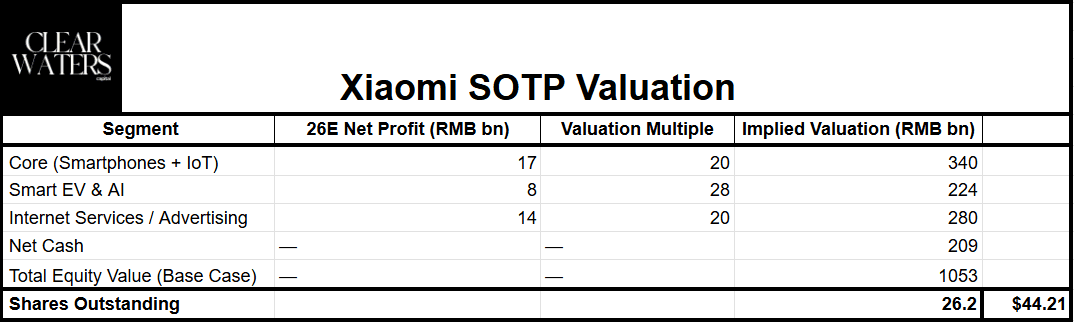
We used a Sum-of-the-Parts (SOTP) valuation, separating the three growth engines. We have an enterprise value of RMB 1,053 billion, with a price target of HKD $44.21 per share (USD $5.68 for OTC listing XIACF). Following a 30% decline since September, we view the current level as fairly priced.
Risks
- Regulatory Tightening: Delays in approval for advanced driving assistance software.
- Geopolitical Barriers: Potential EU trade restrictions and data privacy issues.
- EV Price War: Escalating competition could pressure margins through 2026.
- Chip Supply Chain: Potential U.S. export controls on NVIDIA chips.
Conclusion
Xiaomi's EV business is entering an explosive growth phase, transforming from a consumer electronics maker into a high-technology platform. This transformation is owed to Tesla, which reshaped the manufacturing landscape, but Xiaomi is now capturing the demand for a localized, software-centric "smart ecosystem." As Tesla loses momentum, Xiaomi's "Human × Home × Car" integration places it on a structural upward trajectory.
Key Catalysts
- Five-Year Outlook (2026–2030): EV segment expected to contribute half of group revenue by 2030.
- Production Scale-Up: Expansion of the Beijing Yizhuang factory to reduce the order backlog.
- Product Cycle: Introduction of the SU7 update and a third model in 2027.
- Software Roadmap: Achieving L2+/L3 autonomous driving with NVIDIA Thor and in-house chips.